

In today’s global landscape, companies that embrace strategic waste management are emerging as leaders in sustainable transformation. Integrating strategic waste management practices opens new opportunities for efficiency, profitability, and regulatory compliance. Organizations that understand its potential begin to uncover value where they once saw only cost. That’s why adopting strategic waste management is no longer just a trend — it has become a strategic imperative for ensuring future competitiveness. Far beyond recycling, strategic waste management is redefining entire business models.
Now, imagine this: while many businesses are striving to minimize waste, some global giants are actually competing to acquire more of it. Sounds strange? It’s true. We’ve entered an era in which waste is becoming more valuable than raw materials. Those who recognize this shift early will gain a significant advantage in this new race.
What was once dismissed as mere trash is now viewed as a strategic asset — highly sought after by industries, governments, and ESG-focused investors.
But what’s driving this change? Why has something traditionally seen as an operational burden evolved into a critical factor for competitiveness and sustainability?
In this article, we’ll dive into this transformation and explore its potential impact on the future of the market. Understand what’s happening now — before it reshapes the landscape or leaves your business behind.
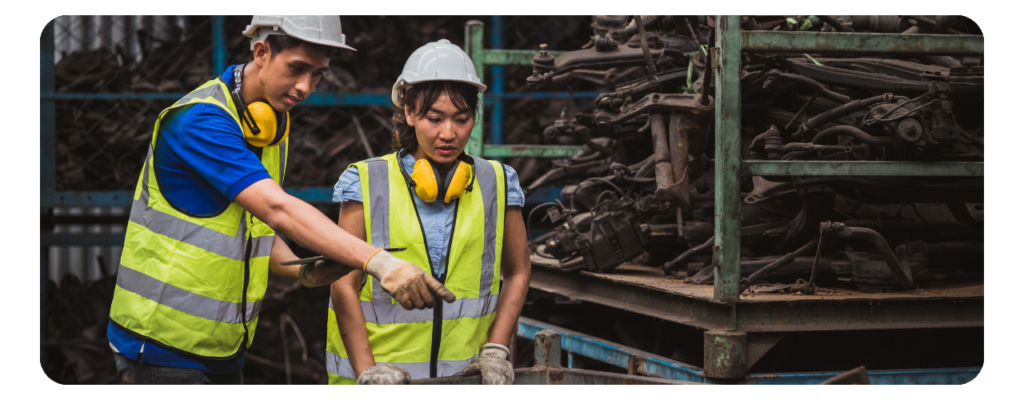
Urban Mining: The New “Green Gold”
The rising scarcity of natural resources, coupled with societal and regulatory pressure for more sustainable practices, has sparked a global phenomenon:
- Cities are being redefined as urban mines, brimming with valuable materials hidden within the waste we discard daily.
- Items like plastic, aluminum, glass, paper, and even organic waste—once perceived as garbage—are now at the core of new supply chains promising both financial and environmental returns.
This approach, globally known as Urban Mining, isn’t just a trend; it’s a rapidly growing sector. Projections show that by 2030, over 40% of all raw materials used in industries could come from recycled waste.
What was once carelessly discarded without any value is now being treated as hidden treasure, an untapped source of wealth ready to be utilized. Far from being just an operational nuisance or a cost to be managed, waste has transformed into a key strategic resource for markets seeking not only cost efficiency but also long-term resilience and sustainability.
Why Are Companies Competing for Waste?
The answer is simple: if you don’t recycle, you’ll pay—and pay big.
Laws such as mandatory reverse logistics, recycling credits, circular economy policies, and strict carbon targets are reshaping the business landscape. Today, the rules are clear:
- Those who generate waste pay for it, whether through fees, fines, or high operational costs.
- Those who recycle and reuse receive incentives and save money, making their processes more efficient and competitive.
Beyond regulations, other factors are pushing businesses to act quickly and adopt sustainable practices:
Consumers demand sustainability. More than ever, people prefer brands that show real commitment to the environment. Companies that ignore this lose relevance and are replaced by competitors who meet public expectations.
ESG-focused investors are changing the game. Capital is increasingly directed toward businesses showing proven environmental impact, forcing organizations to rethink strategies to remain attractive in financial markets.
Supply chains require full traceability, with strict standards for transparency and sustainability. Suppliers that can’t demonstrate sustainable practices are being sidelined, directly affecting their market share.
The key to thriving in this new landscape? Smart waste management powered by data and technology. Companies that understand the importance of integrating tech and efficiency into waste management are already leading. Meanwhile, those resistant to change risk falling behind, losing their place in an increasingly competitive and sustainable market.
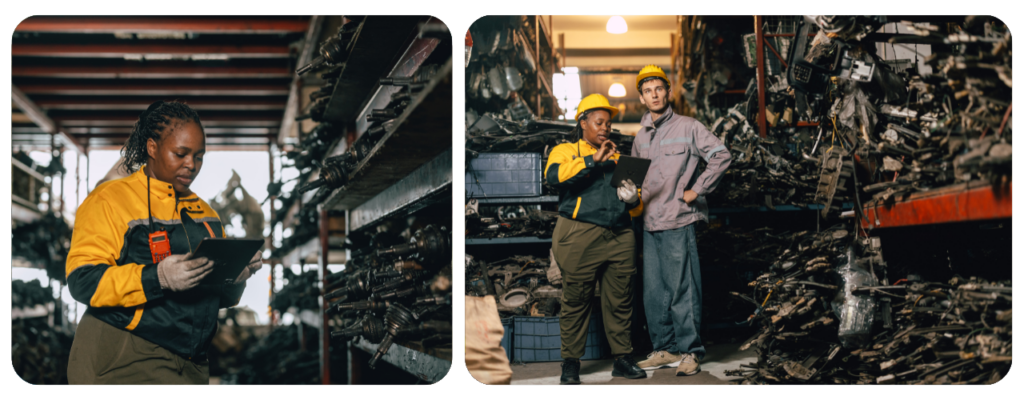
Waste Data: A New Strategic Asset
Few realize this, but waste data can be as valuable as recycling itself. By investing in advanced monitoring and tracking technologies, companies can turn waste-related insights into a strategic advantage. These tools enable the collection, analysis, and interpretation of data along the entire production chain, delivering tangible benefits.
For instance, businesses can:
- Prove circularity in their supply chains, clearly demonstrating that their materials are being reused and reintegrated into production cycles. This not only meets regulatory demands but also strengthens brand reputation with consumers and investors.
- Access financial and tax incentives tied to sustainability, leveraging public policies and programs that reward circular economy initiatives and environmental impact reduction.
- Reduce operational costs by optimizing disposal and material reuse processes. Data analysis helps identify inefficiencies and waste, enabling smarter and more economical operations.
- Sell environmental credits, such as carbon or recycling credits, creating new revenue streams. By proving the positive impact of their practices, companies can actively participate in environmental credit markets, unlocking additional financial value.
- Predict waste generation patterns, using data to forecast trends and adjust operations, increasing efficiency and mitigating risks associated with unexpected surpluses or unforeseen costs.
These practices are already widely recognized as a critical competitive edge. In today’s world, it’s not enough to just dispose of waste efficiently; it’s essential to turn waste into an opportunity to create both environmental and economic value. Every piece of waste produced can become a strategic asset, strengthening a company’s position in a market increasingly focused on sustainability.
The Fatal Mistake: Sticking to Outdated Models
While the world moves rapidly toward cutting-edge practices, such as:
- Automated waste management systems that streamline collection, sorting, and disposal, reducing errors and costs.
- Real-time tracking of material destinations, ensuring full transparency in the lifecycle of every piece of waste.
- Waste monetization through advanced technology, turning what was once a cost into a new revenue source.
- Transforming waste into renewable energy, harnessing the energy potential of discarded materials.
- Detailed, auditable ESG reports that enhance brand reputation and attract investors…
…many companies still rely on outdated, inefficient processes, like complex manual spreadsheets or bureaucratic systems that drain time and resources. These approaches aren’t just more expensive and less effective—they also make businesses visibly less competitive in a market that values agility and sustainability.
The opportunity is clear: embrace modern technologies and practices to optimize operations, reduce costs, and gain a lasting competitive advantage over competitors stuck in the past.
The Future: The Race for Recyclable Waste
The race for recyclable waste is already underway, and it’s set to intensify significantly over the next five years, reshaping the industrial landscape. Competition for secondary raw materials will become fierce, with both new and established players vying for the same valuable resources. Here’s what to expect:
- Intense competition for raw materials: Companies in industries like plastics, traditionally focused on producing virgin resin, will compete directly with recyclers for post-consumer materials, driving up demand and value for waste.
- In-house reverse logistics systems: Large manufacturers, to secure a steady and predictable supply of recycled inputs for production, will begin developing their own selective collection and reverse logistics systems.
- Higher value for cleaner waste: The purity and quality of waste segregation will become a competitive differentiator. Brands and recyclers will pay a premium for well-sorted materials that require less processing and yield higher-quality outputs.
- Increased focus on traceability: Waste that is carefully tracked and optimized from source to reintegration in the supply chain will gain significant value, boosting transparency and efficiency across the sector.
The future of the market is clear: companies that master smart waste management and efficient recycling won’t just meet sustainability goals—they’ll lead the markets of tomorrow with resilience, innovation, and competitive strength.

How Your Company Can Benefit Now — and Hyperion Global’s Role as a Strategic Partner
Faced with this transformation, how can your business stand out in an increasingly sustainable and competitive market? Here are some practical steps that make all the difference—this is where Hyperion Global positions itself as your strategic waste management partner.
- Map your waste in detail, treating it as a strategic asset that can generate value. Recyclable waste, for example, can be transformed into new products or raw materials, creating opportunities for revenue and circularity. Hyperion Global helps businesses conduct this assessment, providing insights and expertise to turn waste into resources.
- Adopt tracking technologies to monitor waste flows and ensure efficiency and transparency. This simplifies internal management, streamlines audits, and strengthens trust with partners and customers. Hyperion Global integrates modern monitoring and management solutions, connecting all processes through a data-driven, reliable platform.
- Leverage data to access incentives like recycling and carbon credits. Companies that demonstrate positive environmental impact are better positioned to secure financial benefits and government incentives. With detailed reporting and guaranteed traceability, Hyperion Global helps transform compliance into a strategic advantage.
- Optimize processes to reduce costs and increase product circularity. Small adjustments in production chains can significantly reduce waste and improve efficiency. Hyperion Global offers specialized consulting and ongoing support to achieve real, measurable improvements.
- Strengthen your ESG narrative with concrete data and clear indicators that align with business growth. Transparency and tangible results are increasingly valued by both investors and consumers, and Hyperion Global provides the tools and insights to achieve this.
Companies that act now will be better positioned to lead this new sustainable era, staying ahead of the competition. Meanwhile, those that remain stagnant risk becoming irrelevant in a market that prioritizes innovation, circularity, and environmental responsibility.
We are living in a Trash Revolution, a transformative moment where waste is no longer just a problem but a central element in growth and sustainability strategies. Around the world, businesses are beginning to see that what was once discarded can actually be a source of innovation, savings, and positive environmental impact.
As with any revolution, there will be those who lead and those who fall behind. The difference will be clear and decisive:
The winners will be those who see waste as an opportunity to create value and act now. The rest will continue to see only trash, wasting valuable resources.
If waste is already becoming one of the world’s most valuable resources, the question remains: What is your business doing with its waste? Are you seizing the opportunity or overlooking the potential you’re literally throwing away?