

A Growing Global Challenge
The global generation of electronic waste (e-waste) has reached alarming levels. According to the United Nations Global E-Waste Monitor, the world produced approximately 62 million tons of e-waste in 2022, and this figure is expected to exceed 75 million tons by 2030 — a 20% increase in less than a decade.
The Estados Unidos alone is responsible for nearly 15% of global e-waste, positioning it among the largest producers worldwide.
Rapid technological innovation, shorter product life cycles, and increased consumer demand are driving this exponential growth. From smartphones and laptops to industrial automation and IoT devices, electronic waste has become one of the most pressing environmental and logistical challenges of our time.
Yet e-waste is not only a problem — it’s also an opportunity for innovation and value creation. When managed strategically, it can fuel resource recovery, operational efficiency, and sustainable growth, redefining how companies view materials and responsibility.
What Exactly Is E-Waste?
E-waste refers to all discarded electrical and electronic devices — whether household or industrial — including:
- IT equipment (computers, servers, phones)
- Consumer electronics (TVs, audio devices, appliances)
- Industrial and medical devices
- Batteries and cables containing rare and hazardous materials
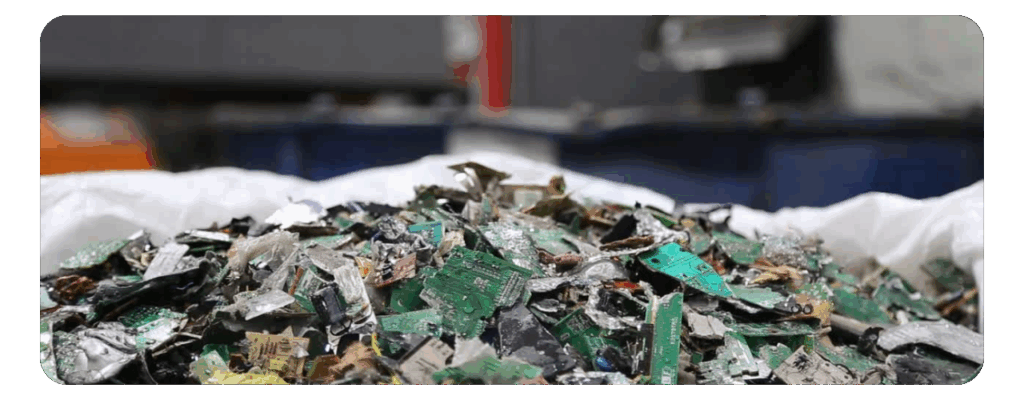
These items often contain valuable metals (gold, copper, palladium, cobalt) and toxic substances (lead, mercury, cadmium, brominated flame retardants).
Without proper collection and recycling, these materials pollute ecosystems and represent a massive economic loss.
The UN estimates that more than $60 billion worth of raw materials are lost annually due to inadequate e-waste recovery — the equivalent of an entire nation’s GDP discarded every year.

Why E-Waste Management Matters for Businesses
Today, e-waste management is more than an environmental concern — it’s a strategic business imperative.
As regulations tighten and ESG (Environmental, Social, and Governance) expectations rise, companies must demonstrate accountability across the full lifecycle of their electronic assets.
Key business drivers include:
- Cumplimiento normativo: States like California, New York, and Washington enforce laws on electronic waste collection, Extended Producer Responsibility (EPR), and right-to-repair policies. Noncompliance can lead to fines, reputational damage, and loss of market access.
- Investor Confidence and ESG Performance: Responsible e-waste handling directly impacts sustainability ratings and investor perception, becoming a key ESG performance indicator.
- Resource Recovery: Recovering valuable materials from obsolete electronics reduces costs and strengthens supply chain resilience.
- Data and Brand Protection: Certified destruction of electronic equipment prevents data leaks, counterfeiting, and brand misuse — essential for industries like finance, healthcare, and manufacturing.
- Eficiencia operativa: Integrating e-waste management into logistics improves visibility, reduces waste-handling costs, and enhances sustainability performance.
Forward-thinking companies see e-waste not as a compliance task but as a core strategy for competitive differentiation.
The E-Waste Landscape in the United States
The U.S. Environmental Protection Agency (EPA) reports that only 17.4% of e-waste generated in the country is properly recycled, with the rest ending up in landfills or incinerated.
However, states such as California, Oregon, and Maine are pioneering Extended Producer Responsibility (EPR) programs that require manufacturers to finance and manage electronics collection and recycling.
Federal initiatives like the National Strategy for Electronics Stewardship (NSES) y Sustainable Materials Management (SMM) Program promote coordination, yet much of the progress comes from state-level innovation and private-sector leadership.
This decentralized landscape creates both challenges and opportunities:
- Fragmented regulations complicate compliance for multi-state operations.
- Local partnerships enable flexibility, efficiency, and community engagement.
That’s why local collection strategies are becoming the backbone of effective e-waste management in the U.S.
Strengthening Local Collection Systems
Local e-waste collection is the foundation of a functional circular economy. When strategically designed, it can lower costs, improve traceability, and raise recycling rates.
The most effective U.S. approaches include:
1. Integrated Reverse Logistics
Embedding collection within existing logistics networks allows companies to reclaim end-of-life equipment efficiently, minimizing transport emissions and improving recovery.
2. Producer Take-Back and EPR Programs
Manufacturers are expanding drop-off, trade-in, and mail-back programs — boosting compliance and customer engagement while ensuring transparent recycling.
3. Public-Private Partnerships (PPP)
Collaboration between municipalities, recyclers, and private operators expands collection infrastructure, creates local jobs, and improves community participation.
4. Digital Traceability
Emerging technologies — such as blockchain, RFID, and QR-coded labeling — enable real-time monitoring of electronics throughout their lifecycle, ensuring transparency and accurate ESG reporting.
5. Community Engagement
Education, incentive programs, and local collection events build public awareness and participation in responsible disposal.
Incentives and Funding Opportunities
Both federal and state governments are strengthening financial frameworks to accelerate circular e-waste systems.
- EPA Grants and Funding:
The Solid Waste Infrastructure for Recycling (SWIFR) program allocates millions annually to support collection and recycling infrastructure, accessible to certified private-sector operators. - State-Level Incentives:
California’s Electronic Waste Recycling Act (EWRA) funds approved recyclers through eco-fees, while Oregon and Washington offer similar grant and rebate programs. - Tax Credits and Green Financing:
Investments in clean technologies, traceability systems, and automation can qualify for tax deductions, sustainability credits, or low-interest loans. - Public Procurement Advantages:
Companies with verified circular systems gain access to ESG-oriented contracts and public procurement opportunities.
These programs reward businesses that turn e-waste management into a source of measurable ESG and financial value.
How Companies Can Prepare for the Future of E-Waste
To succeed in this evolving regulatory environment, companies should:
- Audit and Map E-Waste Streams: Track all electronic assets and their end-of-life paths.
- Adopt Data-Driven Traceability: Use technology to document collection, recycling, and certification.
- Implement Circular Procurement Policies: Prioritize recyclable and reusable components.
- Partner with Certified Operators: Collaborate with trusted specialists to ensure compliance and security.
- Leverage Incentives: Stay informed about available grants and programs to fund sustainable transitions.
Embedding traceability and circularity into waste management helps businesses stay compliant, efficient, and ahead of future regulations.
Why E-Waste Is Also a Business Strategy
E-waste management isn’t just a compliance issue — it’s a growth and innovation strategy.
Companies adopting circular principles benefit from:
- Lower operating costs and reduced risk;
- Improved ESG ratings and investor trust;
- New revenue from recovered materials;
- Greater supply chain resilience;
- Stronger brand reputation and customer loyalty.
In today’s economy, sustainability equals profitability, and mastering e-waste management means leading the transition toward circular growth.

How Hyperion Global Drives Circular E-Waste Solutions
En Hyperion Global, we help businesses transform e-waste challenges into measurable business value.
Our end-to-end circular solutions integrate traceable collection, secure logistics, certified recycling, and asset recovery, ensuring compliance while driving ESG performance and innovation.
We go beyond disposal — we design scalable circular systems that align efficiency, transparency, and sustainability.
Our key services include:
- Responsible e-waste collection and nationwide logistics;
- Secure and certified destruction of materials and data;
- Advanced recycling and upcycling technologies;
- Strategic donation and asset recovery programs;
- Circular reintegration into supply chains.
Con nationwide operational presence and deep expertise in circular solutions, we help our partners access public incentives, reduce costs, ensure compliance, y enhance ESG reputation.
We believe that what’s discarded today can become the resource of tomorrow — and we’re building that future, together.