

For decades, sustainability has been the benchmark. Companies invested in reducing emissions, minimizing waste, and offsetting environmental damage. But reduction alone is no longer enough.
The next evolution in industrial strategy isn’t about doing less harm — it’s about creating active restoration. Leading organizations are now asking a fundamentally different question: How can waste streams become engines of regeneration?
This shift represents a profound departure from traditional thinking. Where conventional approaches treat waste as an unavoidable liability, regenerative design recognizes it as underutilized capital. The companies that master this transition won’t just comply with regulations — they’ll unlock new revenue streams, strengthen supply chain resilience, and build competitive moats that others can’t replicate.
At Hyperion Global, we’ve witnessed this transformation firsthand. Our work in circular waste solutions has revealed a pattern: businesses that reimagine their residual flows don’t just reduce costs. They fundamentally reshape their value proposition.
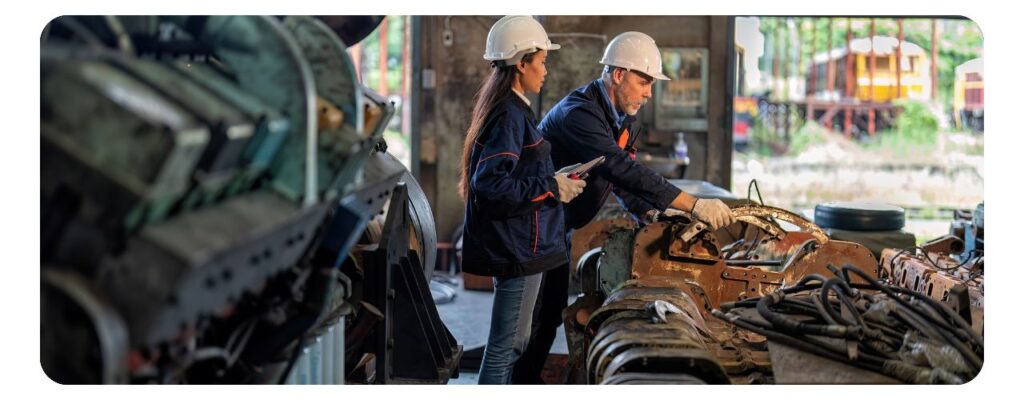
The Paradox of Industrial Waste
Most organizations still operate within a failing framework. They view waste through three limited lenses:
- Environmental liability: Something to be managed, reported, and minimized to avoid penalties.
- Inevitable expense: A cost center that drains resources without generating returns.
- Regulatory obligation: A compliance requirement that adds complexity but little strategic value.
This perspective creates a self-fulfilling prophecy. When waste is treated as worthless, it remains worthless. Companies invest just enough to meet minimum standards, missing the substantial opportunities hidden in their discard streams.
The paradox becomes clear when you examine material flows. Manufacturing processes rarely achieve 100% efficiency. The “waste” often contains valuable compounds, energy potential, or materials that other industries desperately need. Yet these assets leave facilities in trucks headed for landfills, incinerators, or low-value disposal — while purchasing departments simultaneously buy virgin materials at premium prices.
This disconnect isn’t just inefficient. It’s strategically shortsighted.
Global supply chains face mounting pressure from resource scarcity, price volatility, and geopolitical instability. Meanwhile, regulatory frameworks are tightening, with extended producer responsibility laws and circular economy mandates reshaping compliance landscapes worldwide.
Companies trapped in reactive waste management find themselves fighting on two fronts: rising disposal costs and increasing material procurement expenses. Both trends squeeze margins while contributing nothing to competitive differentiation.
The organizations breaking free from this trap share a common insight: residual streams represent displaced value, not worthless byproducts.
The Pillars of Regenerative Waste Management
Regenerative design operates on fundamentally different principles than traditional sustainability. Where sustainability asks “how do we reduce negative impact?”, regenerative thinking asks “how do we generate positive outcomes?”
Applied to industrial waste, this framework rests on four interconnected pillars:
Value Recognition in Residual Flows
Every manufacturing process generates materials classified as waste. But classification doesn’t determine value — it merely reflects current utilization patterns.
Regenerative assessment begins by mapping these flows in detail. What compounds are present? What physical properties exist? What purity levels can be achieved through separation? Where do adjacent industries need exactly these specifications?
This analysis often reveals surprising opportunities. Food processing byproducts become agricultural inputs. Manufacturing trim transforms into raw material for other sectors. Even energy content in certain waste streams can offset facility power consumption.
The key shift is treating residuals as inventory rather than disposal obligations. This inventory mindset triggers different questions and uncovers different solutions.
Industrial Symbiosis Networks
Individual facilities rarely contain complete circular loops. But connected operations can create them.
Industrial symbiosis describes systems where one organization’s residual output becomes another’s valuable input. These networks generate mutual benefit: the source reduces disposal costs while the recipient secures reliable, cost-effective materials.
Effective symbiosis requires three elements:
- Geographic proximity to minimize transportation impacts and costs.
- Material compatibility ensuring residuals meet recipient specifications.
- Operational alignment synchronizing volumes, timing, and logistics.
When these conditions align, symbiotic relationships create extraordinary value. Manufacturing facilities that once paid for waste removal now generate revenue from material sales. Purchasing departments that struggled with supply volatility now access stable, local sources. Both parties strengthen resilience while reducing environmental footprint.
Process Internalization
External symbiosis offers significant benefits. Internal circularity offers even more.
Process internalization means redesigning operations to reincorporate residuals directly. Rather than sending materials offsite, facilities modify production systems to recapture and reuse them internally.
This approach delivers multiple advantages. Transportation costs disappear. Quality control improves since materials never leave controlled environments. Supply chain risks decrease as dependence on external sources falls.
Internalization also reveals inefficiencies that external disposal obscures. When facilities must process their own residuals, waste generation becomes immediately visible and economically painful. This transparency drives continuous improvement in ways that disposal contracts never can.
The most sophisticated operations combine internal loops with external symbiosis — capturing maximum value from each residual stream while maintaining flexibility.
Restoration of Natural Capital
True regenerative design extends beyond industrial boundaries. It considers how production systems interact with broader ecosystems and communities.
This pillar asks whether processes can actively improve environmental conditions rather than simply reducing harm. Can residual management strategies restore soil health? Enhance water quality? Support local biodiversity?
These questions lead to innovations like composting programs that build agricultural soil, water treatment systems that return cleaner effluent than intake, or habitat creation projects funded by waste-derived revenues.
Natural capital restoration creates value that financial statements struggle to capture. It builds community relationships, strengthens social license to operate, and generates authentic differentiation that marketing departments can’t fabricate.
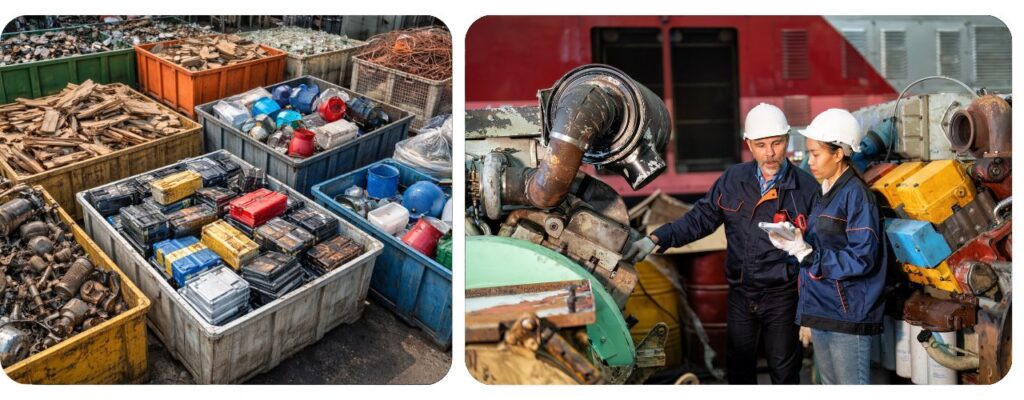
Strategies Hyperion Global Implements
Our work in circular waste solutions has refined specific methodologies for implementing regenerative principles. These aren’t theoretical frameworks — they’re battle-tested approaches that generate measurable results.
Mapping Invisible Value Streams
Most organizations lack complete visibility into their residual flows. They know aggregate volumes and disposal costs, but detailed composition, separation potential, and market value remain opaque.
Our assessment process begins with comprehensive flow mapping. We analyze waste streams at granular levels, identifying:
- Material composition and purity
- Volume consistency and predictability
- Existing separation and processing capabilities
- Potential recipient industries and applications
- Economic value at various processing levels
This intelligence transforms strategic planning. Decisions shift from “how do we dispose of this cheaply?” to “how do we extract maximum value from this asset?”
Building Symbiotic Connections
Identifying potential symbiosis is worthless without implementation capability. Converting opportunities into operational reality requires navigating logistics, regulations, quality standards, and commercial agreements.
We facilitate these connections by:
- Qualifying potential partners to ensure technical compatibility and operational reliability.
- Structuring agreements that align incentives and distribute value fairly.
- Managing logistics to maintain consistent flows and quality standards.
- Monitoring performance to verify environmental and economic benefits.
These connections often start small — pilot programs testing feasibility before scaling. But successful symbiosis generates momentum. As participants recognize value, they invest in optimization, driving continuous improvement.
Internalizing Production Cycles
External symbiosis addresses existing residuals. Process redesign prevents residuals from forming in the first place.
Our engineering teams work alongside client operations to identify internalization opportunities. Can process parameters change to enable recapture? Can separation technologies economically extract reusable materials? Can production sequences rearrange to create closed loops?
These modifications require investment, but returns often materialize quickly. Reduced disposal costs, lower raw material purchases, and decreased supply chain risk generate compelling payback periods.
More importantly, internalization changes organizational culture. When waste becomes immediately visible and economically consequential, it drives behavior change throughout operations. Process engineers optimize yields. Purchasing teams specify materials with circularity in mind. Maintenance crews prevent losses that once seemed insignificant.
Converting Compliance into Competitive Advantage
Regulatory requirements will only intensify. Extended producer responsibility, circular economy mandates, and carbon pricing mechanisms are expanding globally.
Most companies view these as burdens. We help clients recognize them as opportunities.
By exceeding compliance requirements, organizations create defensible market positions. They build expertise that competitors must later acquire. They establish relationships with regulators and policymakers that shape future rules. They attract customers and investors specifically seeking regenerative partners.
This proactive stance transforms regulatory risk into strategic advantage.
The Business Case for Regeneration
Regenerative waste management delivers tangible business value across multiple dimensions:
- Cost reduction through decreased disposal expenses and lower raw material purchases.
- Revenue generation from materials that previously incurred disposal costs.
- Risk mitigation by reducing supply chain dependence and regulatory exposure.
- Brand strengthening through authentic sustainability credentials that resonate with customers, employees, and communities.
- Investor attraction as ESG criteria increasingly drive capital allocation decisions.
- Innovation capability since regenerative thinking often reveals adjacent opportunities in products, services, or business models.
These benefits compound over time. Early movers build capabilities that later entrants struggle to match. They establish symbiotic networks that create switching costs. They develop organizational competencies that apply across operations.
Perhaps most importantly, regenerative approaches future-proof business models. As resource scarcity intensifies and circular economy policies proliferate, organizations dependent on linear systems face mounting disadvantages. Those already operating regeneratively will navigate these shifts far more smoothly.

Beyond Waste Management: Regeneration as Growth Infrastructure
The fundamental reframe is this: waste management isn’t about disposal. It’s about value recovery and ecosystem restoration.
When organizations adopt this perspective, residual streams transform from cost centers into platforms for innovation. Questions shift from “how do we get rid of this?” to “what can we create with this?”
This mindset unlocks possibilities that disposal-focused thinking obscures. It reveals business model innovations, partnership opportunities, and market positions that competitors can’t easily replicate.
At Hyperion Global, we’ve seen companies completely reshape their strategic positioning through regenerative waste design. Manufacturers become material suppliers. Industrial facilities become community resources. Compliance departments become revenue generators.
These aren’t cosmetic changes. They represent fundamental evolution in how organizations create and capture value.
The transition requires investment — in assessment, technology, partnerships, and capability building. But companies making these investments consistently report returns that exceed initial expectations.
The future belongs to organizations that view their residual streams not as disposal obligations but as raw materials for regeneration. The question isn’t whether to make this transition. It’s whether to lead it or follow it.
Designing Your Regenerative Transition
If your organization treats waste management as a necessary expense rather than a strategic opportunity, you’re leaving significant value uncaptured.
The path forward begins with assessment. What residual flows does your operation generate? What value currently goes to disposal? What internal and external opportunities exist for transformation?
At Hyperion Global, our circular waste solutions provide the intelligence and infrastructure to answer these questions and implement regenerative strategies. We help organizations transition from reactive disposal to proactive value creation.
The companies that master regenerative design won’t just meet sustainability requirements. They’ll build competitive advantages that others struggle to match — advantages rooted in resource efficiency, supply chain resilience, and authentic environmental restoration.
Waste isn’t the end of your production cycle. It’s the beginning of your regenerative advantage.